Common Post-PMU Issues and How to Handle Them - Save This Guide!
- Share
- publisher
- Peggy
- Issue Time
- Jun 5,2024
Summary
As a newbie in the permanent makeup (PMU) field, encountering unexpected issues during client procedures is inevitable. From excessive lymph fluid during the process to post-procedure swelling and skin damage, these situations can arise due to the client's skin type or operator error. Clients may question whether these issues result from the technician’s inexperience, leading to concerns about the procedure's quality.
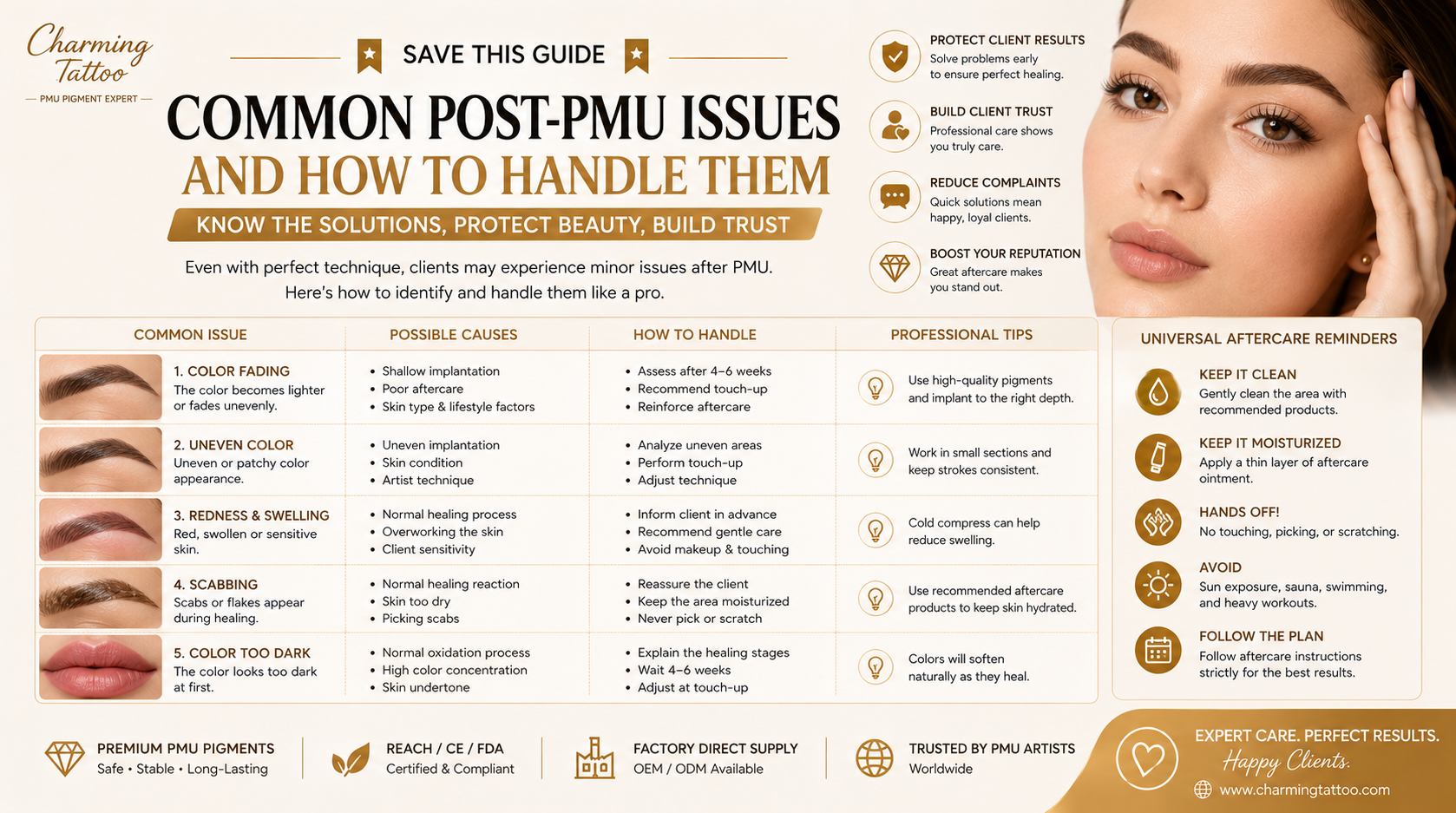
Common Post-PMU Issues and How to Handle Them - Save This Guide!
As a PMU artist, encountering unexpected issues during client procedures is inevitable. From excessive lymph fluid to post-procedure swelling and skin damage, these situations can arise due to skin type or technique. This guide covers common PMU complications and how to handle them effectively.
Key Takeaway: Understanding common post-PMU issues and their solutions helps artists provide better aftercare guidance, reduce client anxiety, and build trust. Proper technique, timely intervention, and clear communication are essential for successful healed results.
Eyebrow Procedure Complications and Solutions
1. Post-Procedure Redness and Blisters
Issue: The skin around the eyebrows turns red and feels blistered.
Analysis: This could be due to excessive strokes causing skin damage or an allergic reaction.
Solution: Apply a mix of gentamicin and dexamethasone topically for 15 minutes, twice daily for three days.
2. Swollen Eyelids Post-Procedure
Issue: Eyelids swell after a second session, despite no issues in the first.
Analysis: Could be due to a mild allergic reaction or client consuming seafood or alcohol.
Solution: Advise the client to take anti-inflammatory medication or antihistamines like cetirizine.
3. Pustules and Redness
Issue: Development of pustules and persistent redness.
Analysis: Possible infection.
Solution: Clean with metronidazole and apply antibiotic ointment like mupirocin for a week.
Eyeliner Procedure Aftercare
| Guideline | Instruction | Tip |
|---|---|---|
| Keep the Area Dry | Ensure the treated area remains dry for three days post-procedure | Use a high pillow to reduce swelling |
| Avoid Heat & Steam | Prevent contact with hot water and steam | Let scabs fall off naturally to maintain pigment retention |
| Cold Compresses | Apply for 20–30 minutes if swelling occurs | Wrap ice packs in a clean cloth |
| Avoid Makeup | Refrain from eye makeup for at least seven days | Use saline solution to clean gently |
Lip Procedure Swelling Causes and Management
Causes of Swelling
Issue: Swelling typically results from extensive trauma to the lip area.
Analysis: Caused by deep needle penetration or repeated passes over the same area.
Solution: Ensure proper technique to avoid excessive trauma.
Sensitivity and Capillary Issues
Issue: Sensitive skin prone to swelling due to minor injuries.
Solution: Use stabilizers to seal capillaries and reduce swelling.
Post-PMU Issues Overview
| Procedure | Common Issue | Key Solution |
|---|---|---|
| Eyebrow | Redness, blisters, pustules | Topical antibiotics, antihistamines |
| Eyeliner | Swelling, scab softening | Cold compress, keep dry, no makeup |
| Lip Blush | Excessive swelling, capillary damage | Proper technique, stabilizers |
Frequently Asked Questions
How long does post-PMU swelling typically last?
Swelling usually subsides within 24–48 hours for eyebrows and eyeliner, and 2–3 days for lip procedures. Cold compresses and keeping the head elevated can help reduce swelling more quickly.
Can I use makeup to cover up post-procedure redness?
No. Applying makeup to a fresh PMU procedure can introduce bacteria and cause infection. Wait at least 7–10 days until the skin has fully healed before using any makeup products on the treated area.
What should I do if my client develops an infection after PMU?
Clean the area with metronidazole solution and apply antibiotic ointment such as mupirocin. If symptoms persist or worsen, refer the client to a healthcare professional for further evaluation.
When should a client seek medical attention for post-PMU complications?
Clients should seek medical attention if they experience severe swelling that does not improve after 72 hours, signs of infection (pus, fever), allergic reactions (difficulty breathing, hives), or if the pain becomes unmanageable.
Final Thoughts
Becoming a skilled PMU artist requires more than just technical proficiency — it demands a comprehensive understanding of various skin types and potential complications. Consistent learning and experience are key to mastering the art and science of PMU.
Remember: proper aftercare guidance is just as important as the procedure itself. By preparing your clients with clear instructions and knowing how to handle complications, you build trust and ensure better healed results.
Related Reading
Interested in learning more about PMU techniques and best practices? Check out these related guides: