Why Choosing the Right PMU Eyebrow Pigment Matters More Than Technique in 2026
- Share
- publisher
- Charming Tattoo
- Issue Time
- Jun 24,2026
Summary
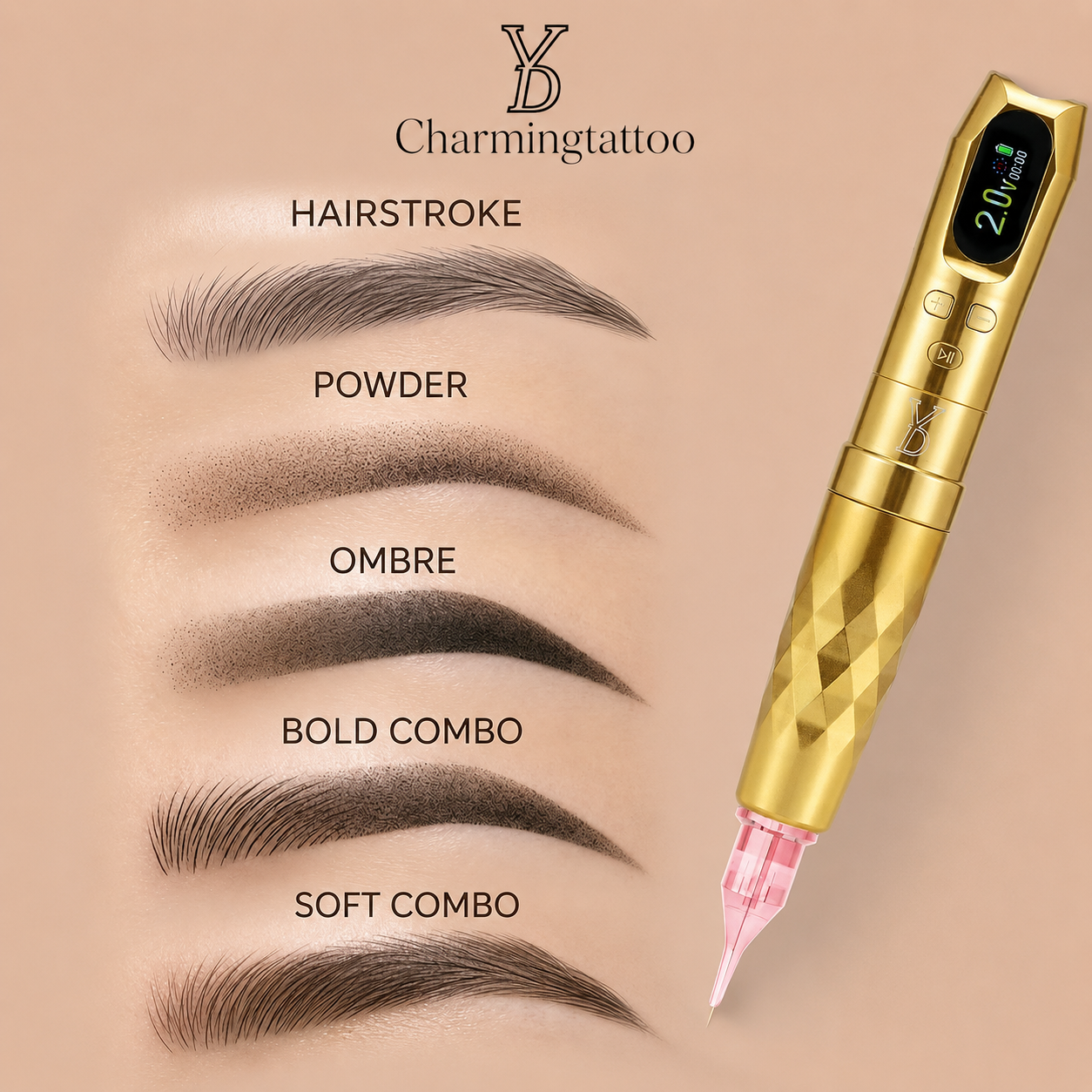
In 2026, PMU artists are focusing more on pigment quality and healed results than technique alone. This article explores why choosing the right eyebrow pigment is essential for color retention, implantation efficiency, and long-term client satisfaction. Learn how water-based liquid pigments support smoother machine procedures, reduce color shifting, and create more predictable healed results across different skin tones for ombre brows, powder brows, and nano hairstrokes.
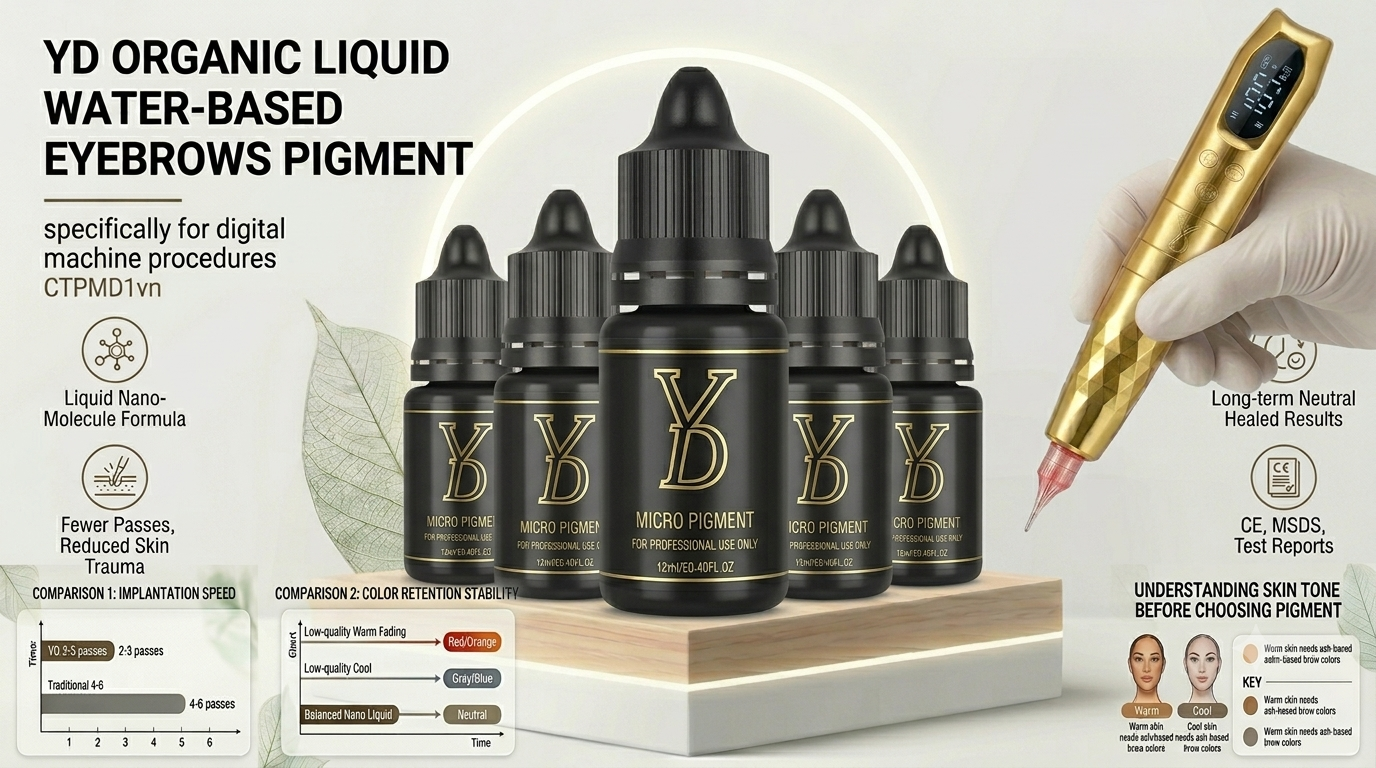
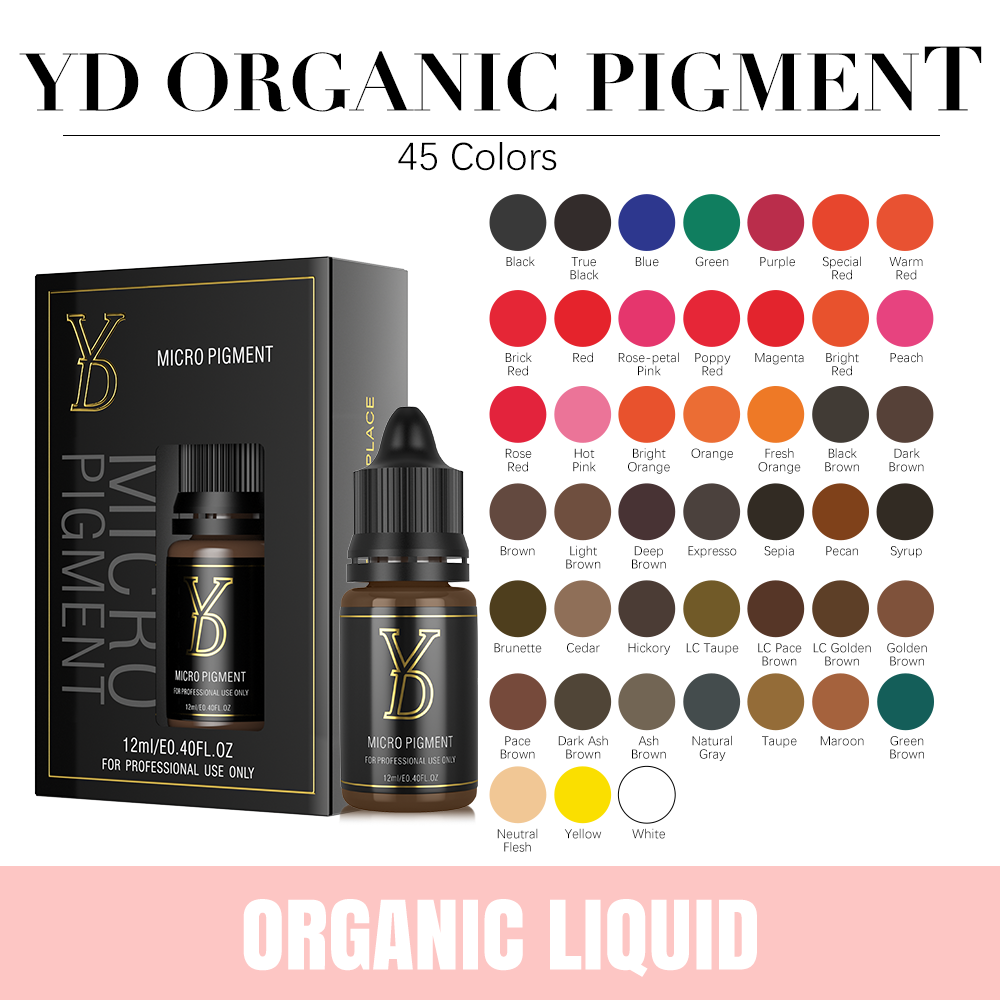
Even the best PMU technique cannot compensate for poor pigment quality. In 2026, the pigment you choose for eyebrow micro-pigmentation determines your healed results far more than your hand speed, needle depth, or implantation angle. YD Organic Liquid Water Based Eyebrows Pigment, engineered for digital PMU machines, delivers superior outcomes with faster healing and truer color retention.
YD Organic Liquid Water Based Eyebrows Pigment is formulated with nano-molecule technology for digital PMU machines. CE and MSDS certified, it delivers faster implantation, reduced skin trauma, and stable long-term color.
Why Artists Are Switching to Water-Based Pigments
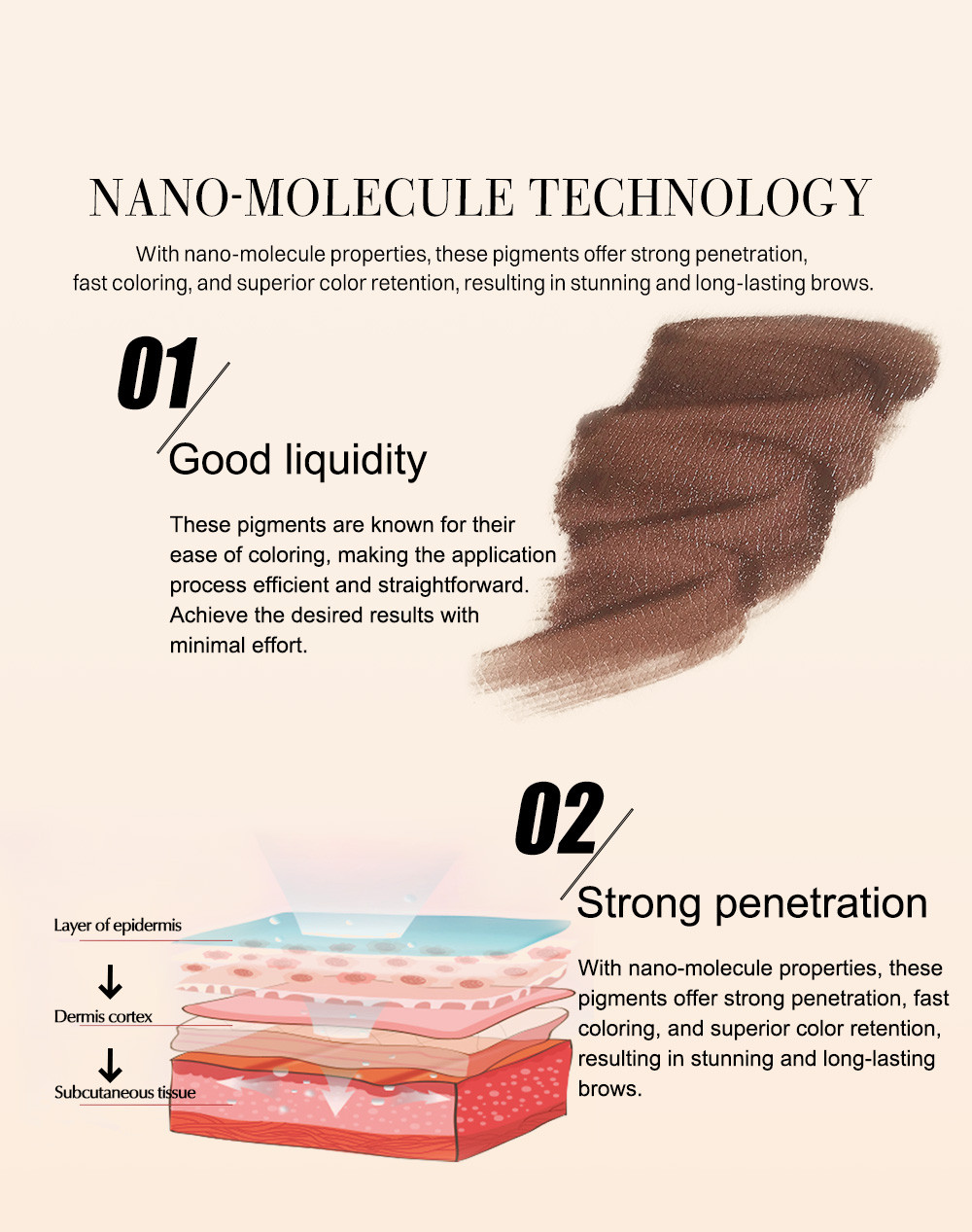
The traditional thick pigment formulation has dominated the PMU industry for years, but a growing number of professional artists are making the switch to water-based liquid pigments. The difference is not just about consistency — it fundamentally changes how pigment interacts with skin tissue.
Water-based pigments feature a much lower molecular weight, allowing them to penetrate the epidermal layer more efficiently. This means fewer passes, less tissue trauma, and a more comfortable experience for the client. Here is why the shift is happening:
- Faster Coloring — Liquid pigment saturates the skin in 2-3 passes versus 4-6 passes with traditional thick pigment, reducing procedure time by up to 50%.
- Better Penetration — Nano-molecule structure allows the pigment to flow naturally into the receiving layer without excessive pressure or overworking.
- Reduced Trauma — Fewer needle passes mean less tissue damage, less swelling, and faster overall recovery for the client.
- Natural Healed Results — Because the pigment settles evenly and does not over-concentrate in any area, the final healed result appears softer and more natural.
Liquid Pigment vs Traditional Thick Pigment: Data Comparison
| Aspect | Traditional Thick Pigment | Liquid Pigment |
|---|---|---|
| Implantation Speed | 4-6 passes required | 2-3 passes required |
| Color Retention | May shift to red/blue/gray over time | Stable long-term color retention |
| Pigment Application Precision | Higher viscosity, less control | Smooth flow in cartridge needles |
| Healing Performance | More tissue trauma, longer recovery | Reduced trauma, faster healing |
| Pigment Stability | Less stable, inconsistent formulation | Stable nano-molecule formulation |
Why Pigment Formula Matters
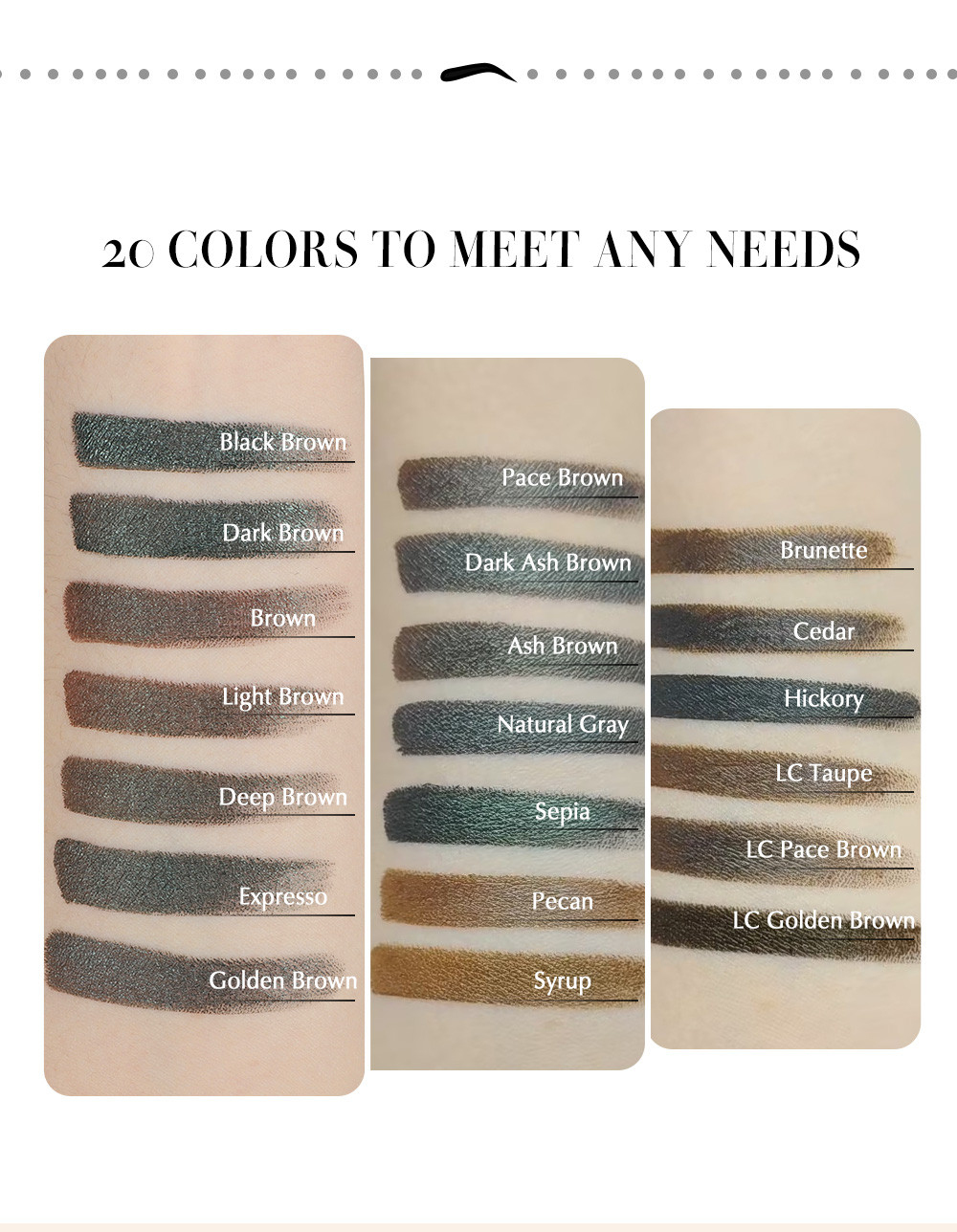
The ingredients in your PMU pigment determine everything from application experience to long-term healed appearance. YD organic liquid pigment uses carefully selected ingredients processed at the nano-molecule level, ensuring each particle is small enough to pass through the epidermal barrier without clogging or pooling.
Nano-molecule technology means the pigment particles are uniformly sized and distributed, preventing the uneven settling that leads to patchy healed results. Every batch undergoes sterility testing and is certified under CE and MSDS standards, giving artists and clients complete confidence in product safety.
Color Retention: Why Liquid Pigment Stays True
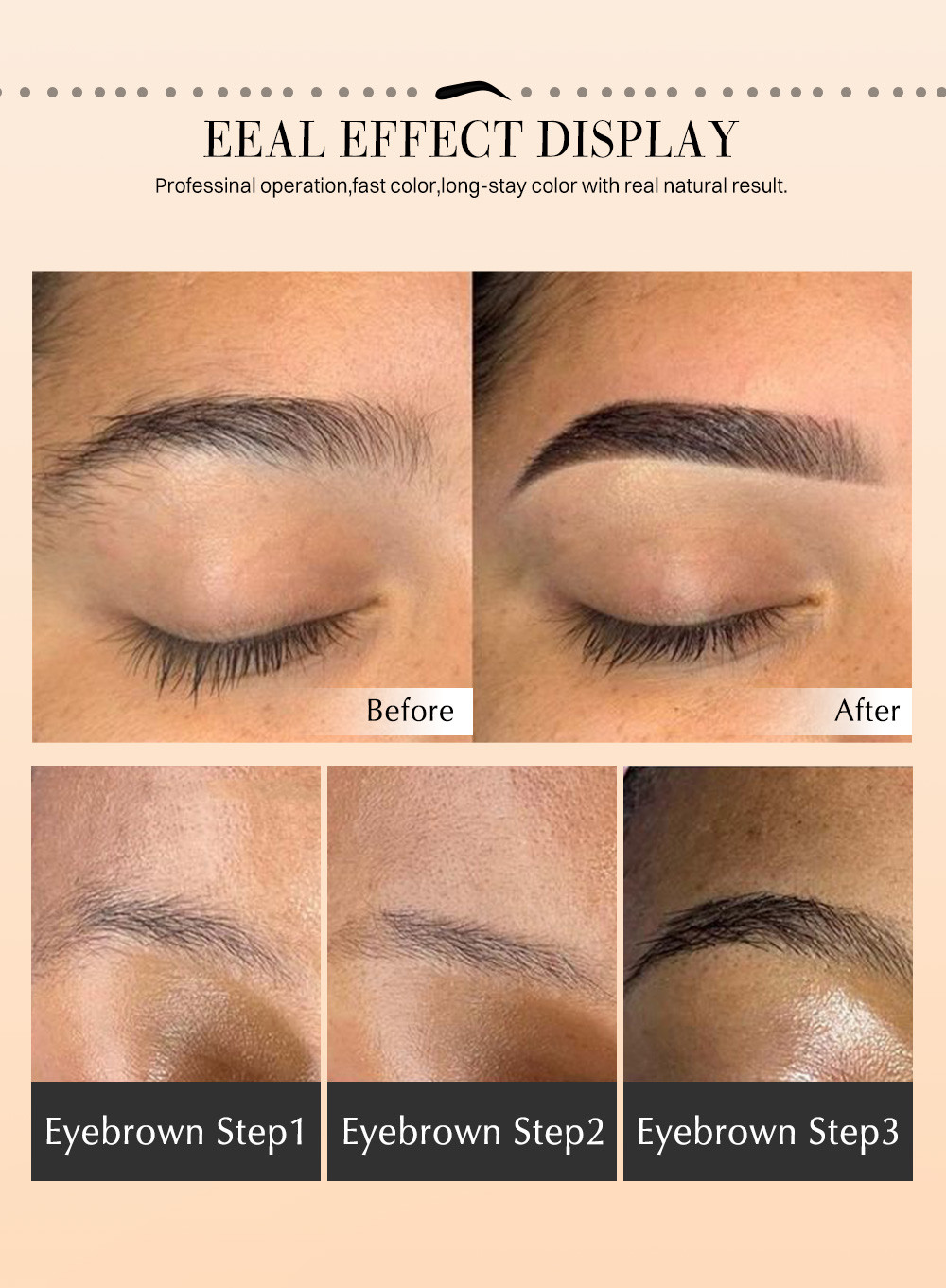
One of the most frustrating outcomes in PMU is when an eyebrow pigment shifts to an unwanted tone — red, blue, or grey — months after the procedure. This color shift is typically caused by larger pigment particles that the body's immune system cannot fully process, leaving behind only the larger, darker particles.
Liquid water-based pigments use uniformly small nano-particles that the body processes evenly. Instead of breaking down differentially, the pigment fades naturally and gracefully, maintaining its original tone throughout the healing cycle. Artists who switch to YD liquid pigment consistently report fewer color-correction touch-ups and higher client satisfaction.
Pigment Application Precision
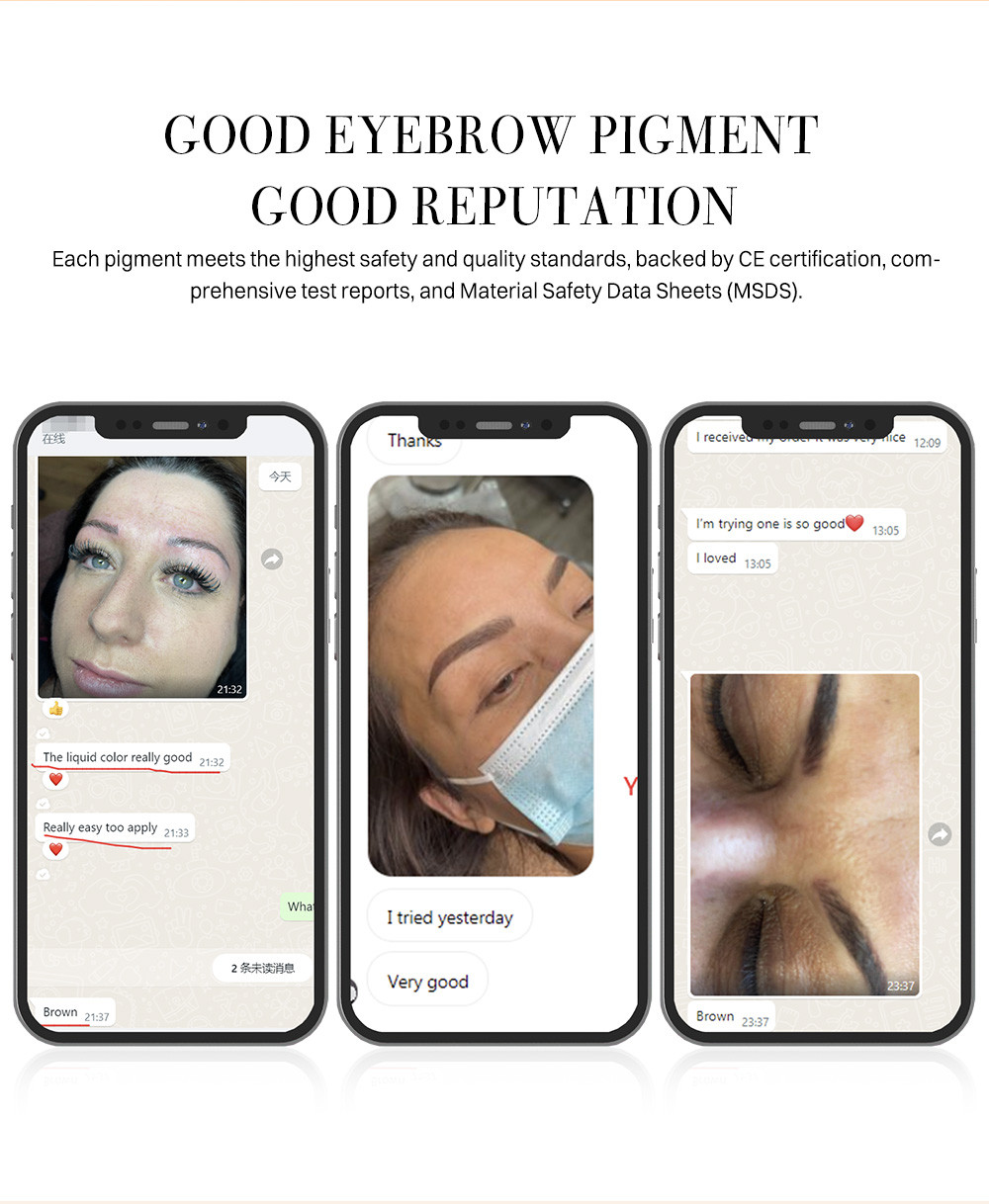
The viscosity of a pigment directly affects how it behaves inside a cartridge needle. Thick, traditional pigments can dry at the needle tip, causing inconsistent flow and forcing the artist to work the skin harder to achieve saturation. Liquid pigment, by contrast, flows smoothly and consistently through even the finest needle configurations.
This precision means the artist can focus on stroke placement and density control rather than fighting the pigment's consistency. The result is cleaner hairlines, more uniform color deposit, and significantly less tissue trauma during the procedure.
Healing Performance Comparison
Healing is where the true quality of a PMU pigment becomes visible. A pigment that causes excessive trauma during implantation will lead to heavier scabbing, longer downtime, and unpredictable color retention. Liquid pigment, with its low-viscosity nano-molecule structure, requires less mechanical force to implant, resulting in minimal tissue disruption.
Clients experience less swelling, lighter scabbing, and faster return to normal activities. The healed pigment appears soft and natural because the even distribution of nano-particles eliminates the dark, over-saturated look that often results from overworking thick pigment into the skin.
Pigment Stability: Why Consistency Matters
Pigment stability refers to how well the formulation maintains its properties from the first use to the last. Traditional thick pigments can separate, settle, or change viscosity over time, leading to inconsistent results across multiple procedures. Liquid nano-molecule pigment, however, remains stable throughout its shelf life because the uniform particle size prevents settling and separation.
This consistency means every session delivers the same predictable performance — whether you are using a fresh bottle or one that has been stored properly for months. For PMU professionals who value reliability and reproducibility, this stability is a critical advantage.
Frequently Asked Questions
Q1: What is the difference between water-based and traditional PMU eyebrow pigments?
Water-based PMU pigments use nano-molecule technology with smaller, uniformly sized particles that flow smoothly through cartridge needles. Traditional thick pigments have larger, irregular particles that require more passes and cause more tissue trauma. Water-based pigments heal faster, retain color more naturally, and provide a more comfortable experience for clients.
Q2: How many passes does liquid PMU pigment typically need?
Liquid PMU pigment typically achieves full saturation in 2-3 passes, compared to 4-6 passes required by traditional thick pigment. This reduces procedure time by up to 50% and significantly decreases tissue trauma, leading to faster healing and more natural results.
Q3: Why do some PMU pigments fade to red or blue over time?
Color shifting occurs when a pigment contains unevenly sized particles. The body's immune system metabolizes smaller particles first, leaving behind only the larger, darker particles that appear red, blue, or grey. Liquid water-based pigments with uniform nano-particles fade evenly and maintain their original tone throughout the healing process.
Q4: Can liquid PMU pigment be used for all skin types?
Yes, liquid PMU pigment is suitable for all skin types including oily, dry, mature, and sensitive skin. The low-viscosity formulation adapts well to different skin textures and conditions, providing consistent results across diverse client profiles. Always perform a patch test for clients with known sensitivities.